Program
The workshop will be a full day workshop on the 16th of March 2026
| Time | Title | Authors |
|---|---|---|
| 08:30-09:00 | Registration | |
| Session 1: Welcome & Keynote | Chair: Sara Montagna | |
| 09:00-09:20 | Welcome to DIGITA | Samuele Burattini, Lukas Esterle, Sara Montagna, Marco Picone |
| 09:20-10:20 | Keynote: Requirements and Design Architecture for Digital Twin End-to-End Trustworthiness | Antonio Virdis |
| 10:20-10:30 | Joint Q&A | |
| 10:30-11:00 | Coffee Break | |
| Session 2: Large Scale Digital Twin Ecosystems | Chair: Lukas Esterle | |
| 11:00-11:20 | Digital Twins of Smart Buildings: Technical Solutions and Challenges | Danila Romanov; Hui Cheng; Victoria Degeler |
| 11:20-11:40 | Sustainable City via Trustworthy Civic Digital Twin: a Use Case | Christian Di Buò; Simone Reale; Roberta Calegari; Andrea Borghesi |
| 11:40-12:00 | GAEA: Experiences and Lessons Learned from a Country-Scale Environmental Digital Twin | Andreas Kamilaris; Savvas Karatsiolis; Chirag Padubidri; Asfa Jamil; Arslan Amin; Indrajit Kalita |
| 12:00-12:20 | A Multi-Simulation Bridge for IoT Digital Twins | Marco Picone; Samuele Burattini; Marco Melloni; Prasad Talasila; Davide Ziglioli; Matteo Martinelli; Nicola Bicocchi; Peter Larsen |
| 12:20-12:30 | Joint Q&A | |
| 12:30-14:00 | Lunch Break | |
| Session 3: Network Digital Twins | Chair: Marco Picone | |
| 14:00-14:20 | Real-Time State Synchronization for Multiplayer VR Applications in ICN | Yoei Waki; Satoshi Ohzahata; Hitoshi Asaeda |
| 14:20-14:40 | Confidence-Based Maintenance Optimization in Digital Twins for Aging Sensor Networks | Eita Kobayashi; Nattaon Techasarntikul; Yuichi Ohsita; Hideyuki Shimonishi |
| 14:40-15:00 | Digital Twin for Intent-driven Edge Networks | Amardeep Kumar; Saugata Roy; Praveen Kumar Donta; Dinesh Kumar Sah |
| 15:00-15:20 | A Human-Centered Domain-Agnostic User Interface for Digital Twins | Manuel Andruccioli; Kelvin Olaiya; Giovanni Delnevo; Silvia Mirri; Paola Salomoni |
| 15:20-15:30 | Joint Q&A | |
| 15:30-16:00 | Coffee Break | |
| Session 4: Security in Digital Twin Ecosystems | Chair: Samuele Burattini | |
| 16:00-16:20 | Dual Mind World Model Inspired Network Digital Twin for Access Scheduling | Hrishikesh Dutta; Roberto Minerva; Noel Crespi |
| 16:20-16:40 | Evaluating Adversary Strategies Through a Security Twin | Fabrizio Baiardi; Vincenzo Sammartino; Salvatore Ruggieri |
| 16:40-17:00 | Federated Learning for Digital Twin-assisted Speech Emotion Recognition | Salvatore Serrano; Claudia Campolo; Giuseppe Ruggeri; Antonella Molinaro; Marica Amadeo |
| 17:00-17:20 | Digital Twin as a Virtual Platform for Security Analysis in log2 N Switching Fabrics | Marek Michalski |
| 17:20-17:30 | Joint Q&A | |
| 17:30-18:00 | Closing | Samuele Burattini, Lukas Esterle, Sara Montagna, Marco Picone |
Keynote: Requirements and Design Architecture for Digital Twin End-to-End Trustworthiness
Keynote: Requirements and Design Architecture for Digital Twin End-to-End Trustworthiness
Speaker: Antonio Virdis
Department of Information Engineering, University of Pisa, Pisa, Italy
antonio.virdis@unipi.it
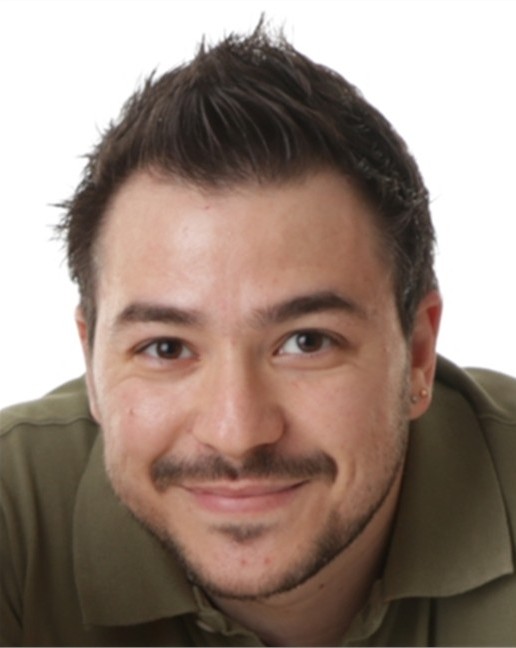
Keynote Speaker: Antonio Virdis.
Abstract
As heterogeneous IoT deployments expand from the edge to the cloud, applications increasingly rely on Digital Twins (DTs)—software artifacts that expose model-driven services while coupling to physical assets via real-time data. This keynote examines how to design, deploy, and operate DTs for end-to-end trustworthiness, treating it as a first-class, application-dependent requirement across data acquisition, model execution, and service exposure. I frame trustworthiness through six technical pillars—entanglement awareness, load resilience, edge–cloud mobility, declarative description, observability, and security—and show how they inform DT internals (model, physical and digital interfaces) as well as the capabilities of the platform that orchestrates them.
Building on these pillars, I present a blueprint platform architecture that integrates DT repositories, policy-driven orchestration, and secure execution domains with telemetry pipelines to sustain fidelity and service continuity under dynamic sensing rates, variable model complexity, and multi-tenant demand. The design leverages admission control and elastic scaling, stateful container-based mobility across edge and cloud, standardized declarative specifications for automation and self-healing, and cross-layer observability (including explainable diagnostics of twin state evolution). I will also touch on metrics used to assess application–twin coupling—such as Overall DT Entanglement (ODTE) alongside timeliness, reliability, and availability targets—and conclude with an industrial IoT case study that quantifies timeliness and compute-time behavior of latency-sensitive versus compute-intensive twins, highlighting practical benefits and open challenges in trusted deployment and automated governance.
Biography
Antonio Virdis is Associate Professor at the University of Pisa, where he obtained his MSc degree in Computer System Engineering in 2011, and his PhD in Information Engineering in 2015. His research interests include Quality of Service, Edge Computing, network simulation and performance evaluation. He co-authored more than 90 peer-reviewed papers and 8 patents in the above fields. He led and has been involved in research projects supported by private industries and funded by the EU community and by Italian MUR.
Among recent projects, he served as principal investigator for DATRUST (Connecting the physical and DigitAl worlds through TRUSTworthy data-flows) and as the University of Pisa lead for TWINKLE (digital TWIN continuum: a Key enabler for pervasive cyber-physicaL Environments), funded under the PRIN PNRR 2022 and PRIN PNRR programmes, respectively; both projects focus on the design and orchestration of digital twins. He served as TPC chair for the International OMNeT++ Summit, and for the IEEE SmartSys workshop, and as a member of the TPC for more than 20 international conferences. He is also one of the founders and co-chairs of the TwinNets Workshop. He is one of the authors and maintainers of the SimuLTE and Simu5G opensource projects, for the system-level simulation of 4G and 5G communication networks.